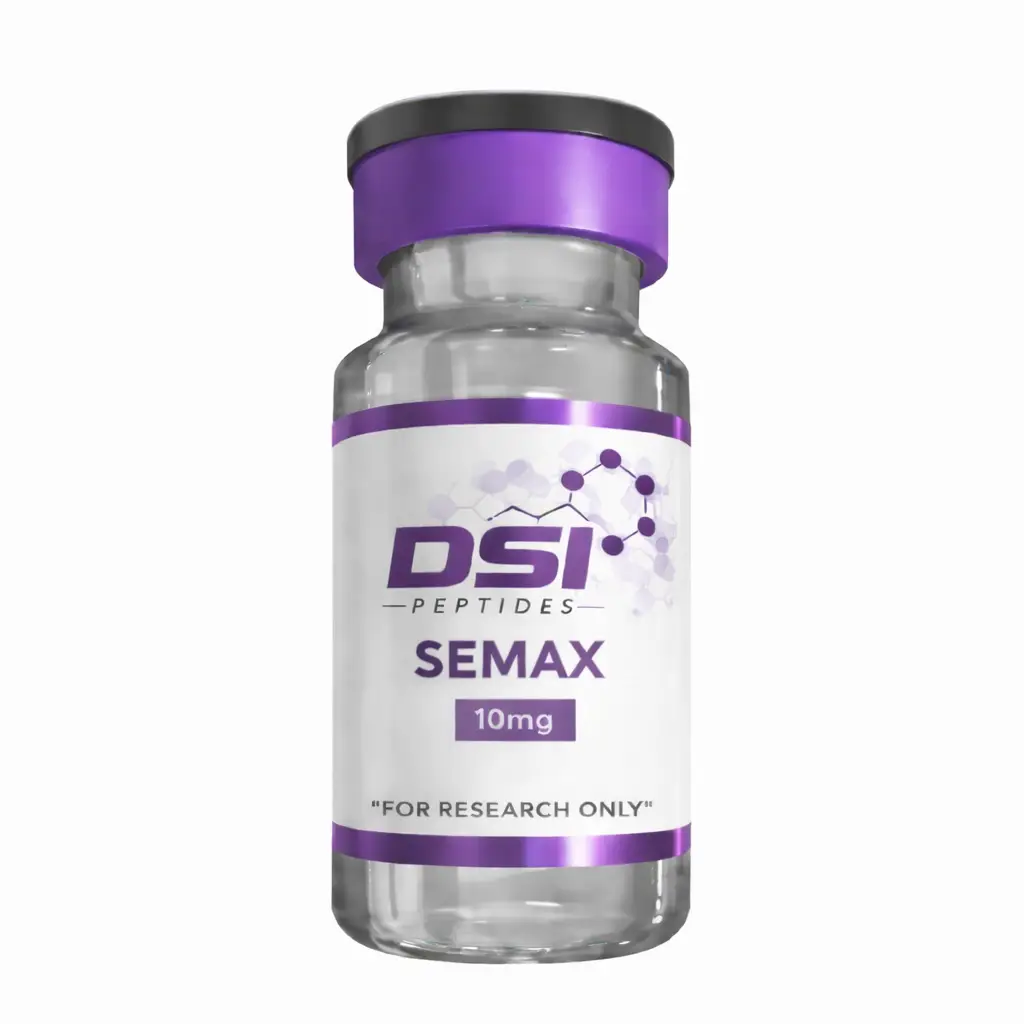
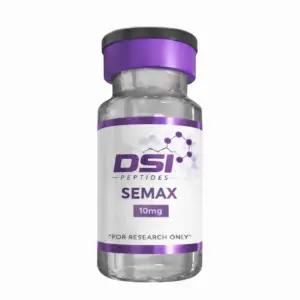
Semax is a synthetic peptide developed for research into neuroprotection, cognitive function, and neuroregulatory signaling. It is derived from a fragment of adrenocorticotropic hormone (ACTH), specifically modified to remove hormonal activity while preserving potential central nervous system effects.
Basic characteristics
- Structure: Heptapeptide (7 amino acids)
- Sequence: Met-Glu-His-Phe-Pro-Gly-Pro
- Class: ACTH-derived neuropeptide analog
- Modification: Lacks endocrine (steroid-stimulating) activity typical of full ACTH
Mechanism of action (research context)
Semax has been studied for its effects on multiple brain signaling systems. Proposed mechanisms include:
Neurotrophic modulation
- Increases expression of brain-derived neurotrophic factor (BDNF)
- May influence other growth factors involved in neuronal survival and plasticity
Neurotransmitter systems
- Modulates dopamine and serotonin pathways in experimental models
- May affect signaling related to attention, mood, and cognition
Anti-inflammatory and neuroprotective effects
- Reduces expression of pro-inflammatory cytokines in some studies
- Protects neurons under conditions of hypoxia or oxidative stress
Cerebral blood flow
- May enhance microcirculation and oxygen delivery in brain tissue
Research applications
Semax has been investigated across several experimental domains:
Cognitive and behavioral studies
- Learning and memory models
- Attention and executive function pathways
Neuroprotection research
- Ischemia and stroke models
- Hypoxic brain injury
- Oxidative stress-related neuronal damage
Psychoneuroendocrinology
- Stress-response modulation
- Interaction with central regulatory peptides
Peptide signaling studies
- Structure–activity relationships of ACTH-derived fragments
- Exploration of non-hormonal neuroactive peptide analogs
Key properties
- Relatively stable compared to many small peptides
- Often studied via intranasal delivery in experimental settings (to target CNS pathways)
- Does not significantly stimulate cortisol production (unlike ACTH)
Limitations and considerations
- Mechanisms are multifactorial and not fully defined
- Much of the research originates from preclinical or region-specific clinical studies
- Effects can vary depending on dose, delivery method, and model system
- Limited large-scale, globally replicated studies
Summary
Semax is a synthetic ACTH-derived research peptide primarily studied for its neuroprotective, cognitive-modulating, and neurotrophic effects. It serves as a tool for exploring how short peptide fragments can influence brain function without triggering classical hormonal pathways.

Reviews
There are no reviews yet.