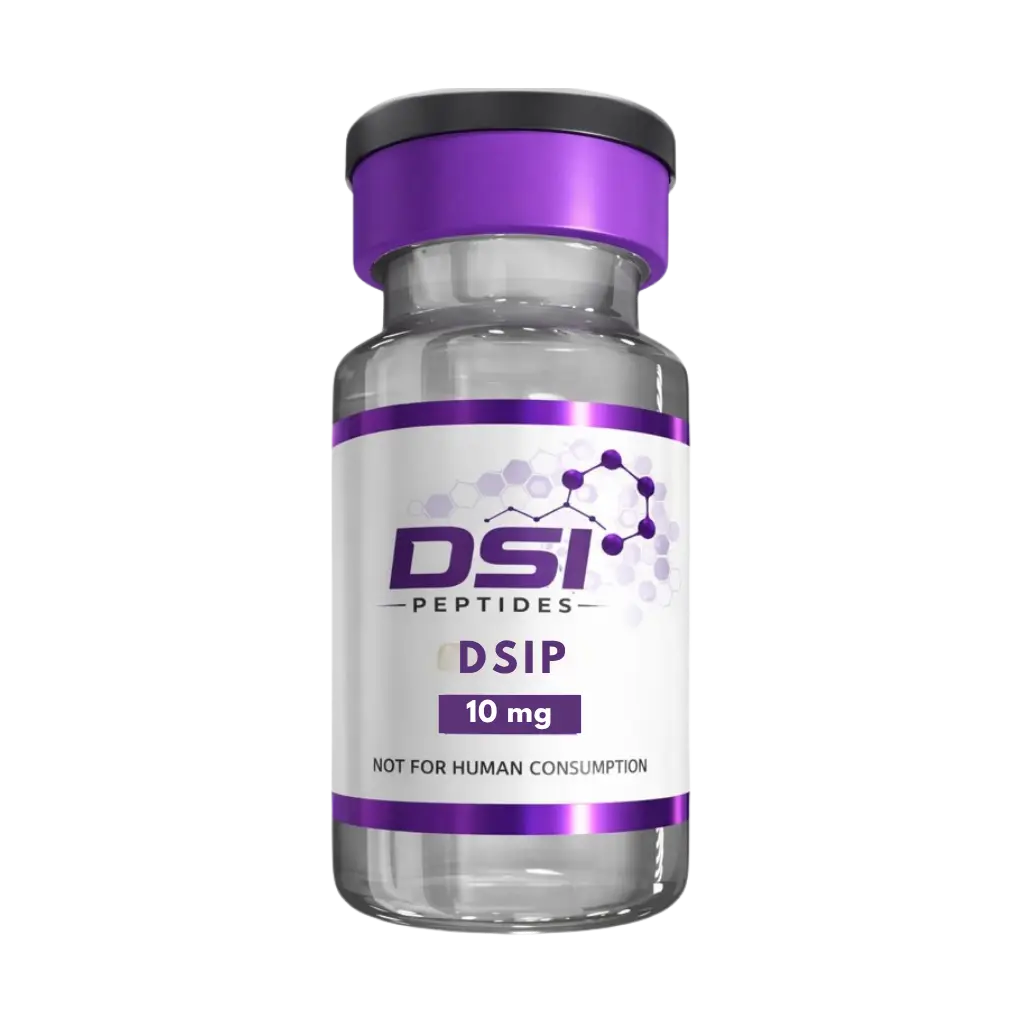
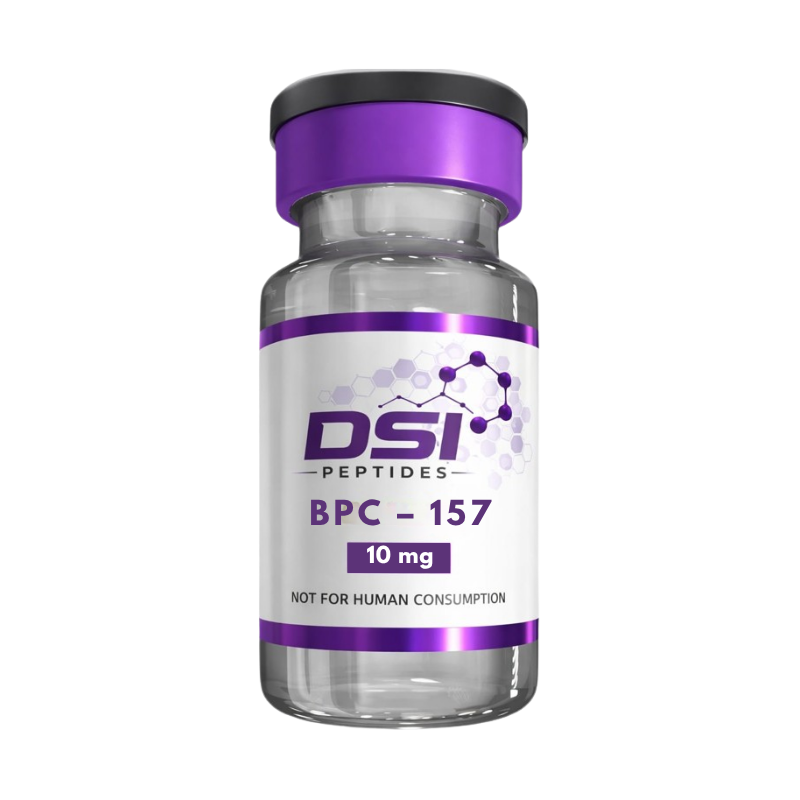
DSIP (Delta Sleep–Inducing Peptide) is a naturally occurring peptide that has been studied for its potential role in sleep regulation, neuroendocrine function, and stress responses. When referred to as “DSIP 10 mg peptides,” this typically denotes a research quantity or preparation size rather than a distinct molecular variant.
Basic characteristics
- Full name: Delta Sleep–Inducing Peptide
- Structure: Nonapeptide (9 amino acids)
- Sequence: Trp-Ala-Gly-Gly-Asp-Ala-Ser-Gly-Glu
- Class: Neuroregulatory peptide
- Origin: Initially isolated from brain extracts in sleep-related research
Mechanism of action (research context)
The exact mechanism of DSIP remains incompletely understood, which is why it continues to be of research interest. Proposed actions include:
- Interaction with central nervous system pathways involved in sleep regulation
- Modulation of neurotransmitters such as GABA and possibly serotonin
- Influence on hypothalamic-pituitary axis activity, affecting hormone release
- Potential regulation of circadian rhythms and stress signaling
Unlike classical sedatives, DSIP does not act as a direct receptor agonist with a well-defined binding profile; its effects appear more modulatory and system-wide.
Research applications
DSIP has been investigated in a variety of experimental contexts:
Sleep studies
- Effects on slow-wave (delta) sleep patterns
- Regulation of sleep onset and maintenance
- Interaction with circadian rhythm mechanisms
Endocrine research
- Modulation of hormones such as:
- Cortisol
- Growth hormone
- Luteinizing hormone (LH)
Stress and neurological research
- Potential anti-stress or adaptogenic effects
- Influence on pain perception (analgesic pathways)
- Studies on neuroprotection and oxidative stress
Other experimental areas
- Investigation of alcohol tolerance and withdrawal models
- Effects on thermoregulation and autonomic function
Key properties
- Short half-life in circulation due to rapid degradation
- Variable bioavailability depending on experimental delivery method
- Effects can differ significantly across species and study designs
Limitations and uncertainties
- Mechanism not fully established despite decades of study
- Inconsistent results across experiments, especially in sleep-related outcomes
- Difficulty detecting stable endogenous levels in biological systems
- Some researchers question whether DSIP acts directly or via downstream metabolites
Summary
DSIP is best understood as a neuroregulatory research peptide with proposed roles in sleep modulation, endocrine signaling, and stress response. However, its biological activity is complex and not fully characterized, making it primarily useful as an exploratory tool in neuroscience and physiology rather than a well-defined signaling molecule.

Reviews
There are no reviews yet.